


Before becoming a parent, you probably never thought you would spend this much time reading baby care labels. But here you are, comparing ingredient lists and looking for something gentle enough for your baby’s delicate skin.
This is a familiar process for many parents, especially those navigating baby care for the first time. As one first-time mom shares: “My biggest fear is when she develops any skin irritation. I look for these green flags: gentle, hypoallergenic, natural and recommended by other moms.”
If that search keeps bringing you back to one ingredient, calendula, there is a good reason. Calendula is a flowering plant that has been used for centuries in traditional skincare to help soothe and calm sensitive skin. Understanding calendula benefits for baby skin can help you feel more confident the next time you reach for a wash or lotion, and those benefits are also why Human Nature chose calendula as a key ingredient in its natural baby care line.
Why Baby Skin Needs Extra-Gentle Daily Care
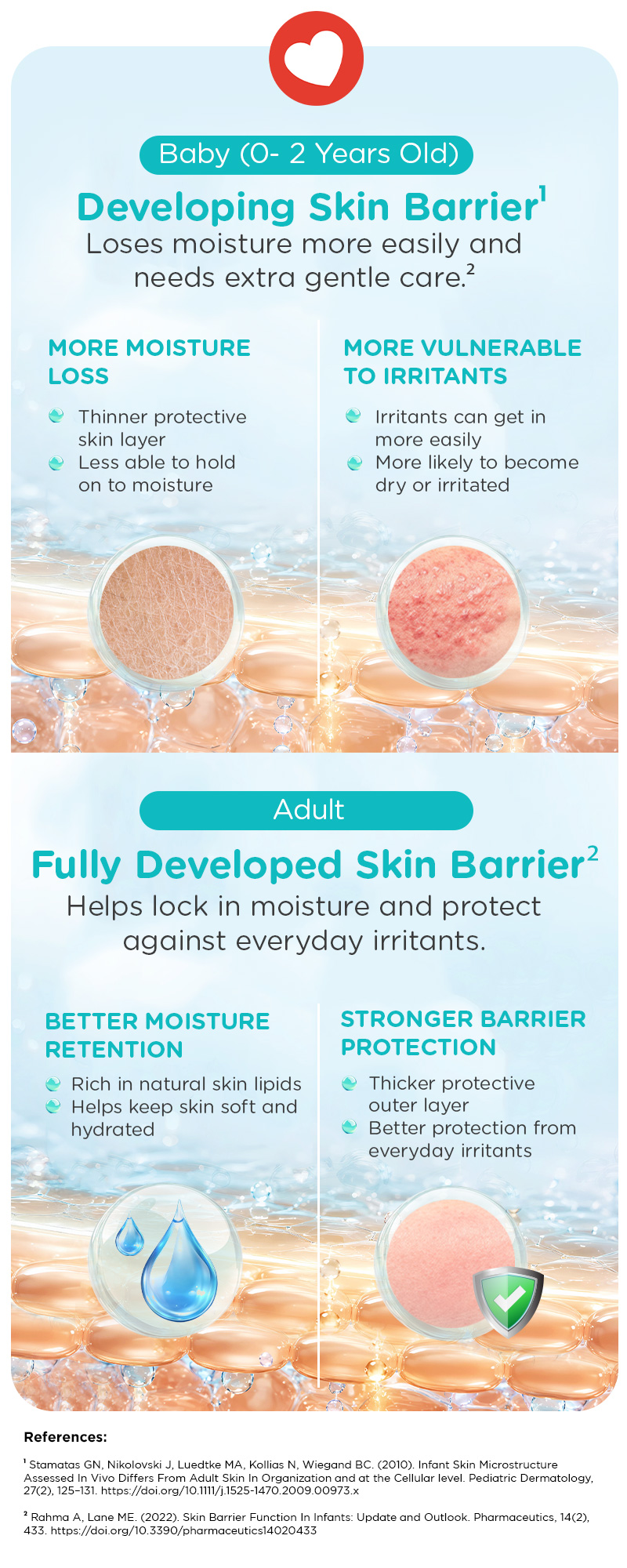
Baby skin may look perfectly soft, but it is still learning how to protect itself. In the first months and years, a baby’s skin can lose moisture more quickly and may be more sensitive to ingredients that would not bother an adult. That is why choosing gentle formulas becomes even more important during this stage.
The research helps explain why. One study on healthy infants aged 0 to 24 months shows that the skin barrier continues to mature throughout this period.1 And the differences are measurable. Another study published in Pediatric Dermatology found that the stratum corneum, the outermost protective layer of skin, is approximately 30% thinner in infants than in adults, while the epidermis is about 20% thinner.2
A little extra attention to what goes on your baby’s skin can go a long way. And when it feels calm and comfortable, everyday care can feel a little easier for both of you.
Bathing A Baby in the Philippines’ Tropical Climate
In the Philippines, daily baths are part of the routine for many families, especially in a hot and humid climate. The concern is not daily bathing itself, but rather how it is done. Long baths, water that is too hot, or cleansers that are too harsh may strip away some of the skin’s own oils and contribute to dryness.
A quick, lukewarm bath with a natural baby wash, followed by a moisturizing lotion, can help replenish moisture and support the skin barrier, especially with daily bathing.
When your baby’s skin feels comfortable, everyday moments like bath time can feel calmer for both of you. This is also why parents often look for soothing ingredients like calendula, for a little more peace of mind.
What Is Calendula, And Why Is It Used In Baby Skincare?
Calendula officinalis, commonly called pot marigold, is a flowering plant native to the Mediterranean region. Its bright orange-yellow petals have been used in traditional European herbal medicine for centuries, particularly to help calm and comfort irritated skin.
What Research Says About Calendula and Baby Skin
Calendula flowers contain plant-based compounds such as flavonoids and triterpenoids, which have been studied for their anti-inflammatory activity and potential role in supporting skin repair.3
But what does the evidence show so far? A systematic review found some evidence that Calendula officinalis extract may support wound healing, although results varied across studies and researchers noted that more well-designed clinical trials are still needed.4 This research helps explain why calendula is often included in baby skincare formulas intended to help soothe dryness, redness, and minor discomfort.
What Parents Should Keep In Mind
When it comes to everyday products like baby washes and lotions, it is worth noting that they are designed to care for delicate skin, not treat a medical condition. If your baby has persistent redness, inflamed patches, or broken skin, it is best to speak with a pediatrician first. For routine skincare, a simple patch test on a small area of your baby’s arm can help you feel more confident when trying a new product.
A Gentle Wash-And-Lotion Routine for Baby Skin
Once you know what baby skin needs, finding a routine that supports it every day is easier than you think.
Human Nature’s Baby Wash and Baby Lotion with Calendula make everyday bath time a simple two-step routine. It starts with the Baby Wash to gently cleanse your baby’s delicate skin. In fact, 93% agreed that it left their child’s skin feeling soft and smooth.* Then the Baby Lotion helps nourish and moisturize the skin, with 9 out of 10 satisfied with its moisturizing ability, absorbability, and lightweight feel.*


Both products are made with genuinely natural ingredients and soothing calendula to help calm dry, sensitive, or irritated skin. Together, they leave your baby clean, comforted, and cuddle-ready.
The formulas are also made without several ingredients included in Human Nature’s “no harmful chemicals” standard:
- SLS/SLES: cleansing agents that may strip away natural oils and may be too harsh for a baby’s still-developing skin barrier.
- Silicones: film-forming ingredients that can sit on the skin and may not feel comfortable on delicate baby skin.
- Synthetic fragrances: fragrance blends that may contain allergens capable of irritating sensitive skin.
- Parabens: preservatives that may contribute to rashes and skin irritation.
On top of that, 100% experienced no adverse reactions on their baby’s skin after using the Baby Wash and Baby Lotion.*
You can also explore the full range of natural baby care products.
Build A Gentle Bath Time Routine
Caring for your baby’s skin does not have to be complicated. A simple wash-and-lotion routine can help keep delicate skin soft, moisturized, and comfortable after every bath. Explore Human Nature’s Baby Wash and Baby Lotion with Calendula for soothing care, because some of the best everyday moments begin with comfortable skin.
Frequently Asked Questions About Calendula For Babies
Is calendula good for babies?
Calendula is generally considered good for baby skin and has a long history of traditional use in products made for delicate skin. That said, what matters most is the overall formula and whether the product was specifically made with babies in mind. If you are trying something new, consider patch-testing it on a small area of your baby’s arm first.
What does calendula do for baby skin?
Calendula is known for its skin-calming properties that can help soothe dryness, redness, and minor everyday discomfort. In baby skincare, it is commonly included to keep delicate skin feeling soft and comfortable.
How to use calendula for baby skin?
Start by choosing a calendula product made specifically for babies, and always follow the directions on the label. A simple daily routine can look like this: use a mild calendula baby wash during a short, lukewarm bath, then apply a calendula baby lotion afterward to help replenish moisture and keep the skin comfortable.
When should you avoid using calendula on a baby?
Calendula is known for its skin-calming properties that can help soothe dryness, redness, and minor everyday discomfort. In baby skincare, it is commonly included to keep delicate skin feeling soft and comfortable.
How to use calendula for baby skin?
Start by choosing a calendula product made specifically for babies, and always follow the directions on the label. A simple daily routine can look like this: use a mild calendula baby wash during a short, lukewarm bath, then apply a calendula baby lotion afterward to help replenish moisture and keep the skin comfortable.
When should you avoid using calendula on a baby?
Avoid applying any cosmetic baby wash or lotion to broken, infected, or severely inflamed skin unless your pediatrician says otherwise. Calendula may also cause a reaction in babies who are sensitive to plants in the Asteraceae family, such as daisies and chrysanthemums.5 If irritation appears after use, stop using the product and check in with your pediatrician.
Can I put calendula on diaper rash?
A regular calendula baby wash or body lotion is not designed to treat diaper rash. Calendula has been studied in specially formulated ointments for mild diaper dermatitis, but those findings do not carry over to everyday wash or lotion products. For the diaper area, it is best to use a product made for that purpose. If the rash persists or worsens, your pediatrician can advise you on the right care.
- Ludriksone L, Garcia Bartels N, Kanti V, Blume-Peytavi U, Kottner J. (2014). Skin barrier function in infancy: a systematic review. Archives of Dermatological Research, 306(7), 591–599. https://doi.org/10.1007/s00403-014-1458-6 ↩︎
- Stamatas GN, Nikolovski J, Luedtke MA, Kollias N, Wiegand BC. (2010). Infant skin microstructure assessed in vivo differs from adult skin in organization and at the cellular level. Pediatric Dermatology, 27(2), 125–131. https://doi.org/10.1111/j.1525-1470.2009.00973.x ↩︎
- Della Loggia R, Tubaro A, Sosa S, Becker H, Saar S, Isaac O. (1994). The role of triterpenoids in the topical anti-inflammatory activity of Calendula officinalis flowers. Planta Medica, 60(6), 516–520. https://doi.org/10.1055/s-2006-959562 ↩︎
- Givol O, Kornhaber R, Visentin D, Cleary M, Haik J, Harats M. (2019). A systematic review of Calendula officinalis extract for wound healing. Wound Repair and Regeneration, 27(5), 548–561. https://doi.org/10.1111/wrr.12737 ↩︎
- European Medicines Agency. (2018). European Union herbal monograph on Calendula officinalis L., flos – Revision 1. Committee on Herbal Medicinal Products. EMA/HMPC/437450/2017. ↩︎
*Based on Consumer Panel Test