



Frizzy hair is not a hair type. It’s a condition. And that means it’s something you can manage.
Most of the time, frizz is simply a sign that your hair is dehydrated. When hair lacks moisture, the cuticles lift rather than lie flat.
So before you blame your hair, try giving it more moisture and hydration. To help you achieve your desired #hairgoals, this article will show you how to fix frizzy hair and get those smoother, healthier locks.
What Causes Frizzy Hair?
Before you start layering on products, it helps to understand what’s really behind the frizz. Once you know what’s triggering it, you can manage how to control frizz, and it becomes a lot less frustrating.
Here are the usual suspects causing your strands to puff up:
- Damage and dryness: Too much heat styling or frequent chemical treatments can leave hair weakened and thirsty. When strands are stripped of moisture, they become fragile, prone to split ends and breakage, and more likely to puff up into that rough, frizzy texture instead of falling smoothly into place.
- Friction: Your hair’s surface is made up of tiny overlapping layers that are meant to lie smooth and flat. But rough handling can disturb that delicate structure. Think aggressive towel-drying, constant backcombing, or teasing. All that rubbing lifts the cuticle, leaving strands textured, unruly, and far more prone to frizz.
- Humidity: Hair behaves a lot like a sponge. When the air is humid, it absorbs moisture from its surroundings. That extra water causes each strand to swell, lifting the outer layer and making the surface feel rough instead of smooth. As strands expand and move in different directions, that soft, polished finish turns into frizz.
So, How Do You Actually Tame Frizz?
Now that we know what causes frizzy hair, let’s talk about what you can actually do about it.
1. Fix Frizz in the Shower
If you want to fix frizz long term, start here. The way you wash your hair sets the foundation for everything else.
Choose a gentle moisturizing shampoo like the Sleek & Silky Shampoo that cleans without stripping your hair’s natural oils. Look for ingredients like hyaluronic acid, which locks in moisture and hydration, and jojoba oil, which mimics your scalp’s natural oils to soften and smooth strands without weighing them down.
Always follow with a conditioner such as Sleek & Silky Conditioner, focusing on the mid-lengths and ends. According to the American Academy of Dermatology (AAD), conditioners benefit the hair by:
- reducing static
- making damaged hair look healthier
- strengthening strands
- boosting shine
- protecting from UV damage
And remember, washing every day isn’t always your friend. Many find that skipping a day (or two) keeps hair calmer, softer, and less frizz-prone.
2. Handle Wet Hair With Care
Hair is most fragile when wet, so small habits here make a big difference. Instead of rubbing your hair with a towel, gently squeeze or blot out excess water. Rough drying creates friction, which lifts the cuticle and leads to more frizz later.
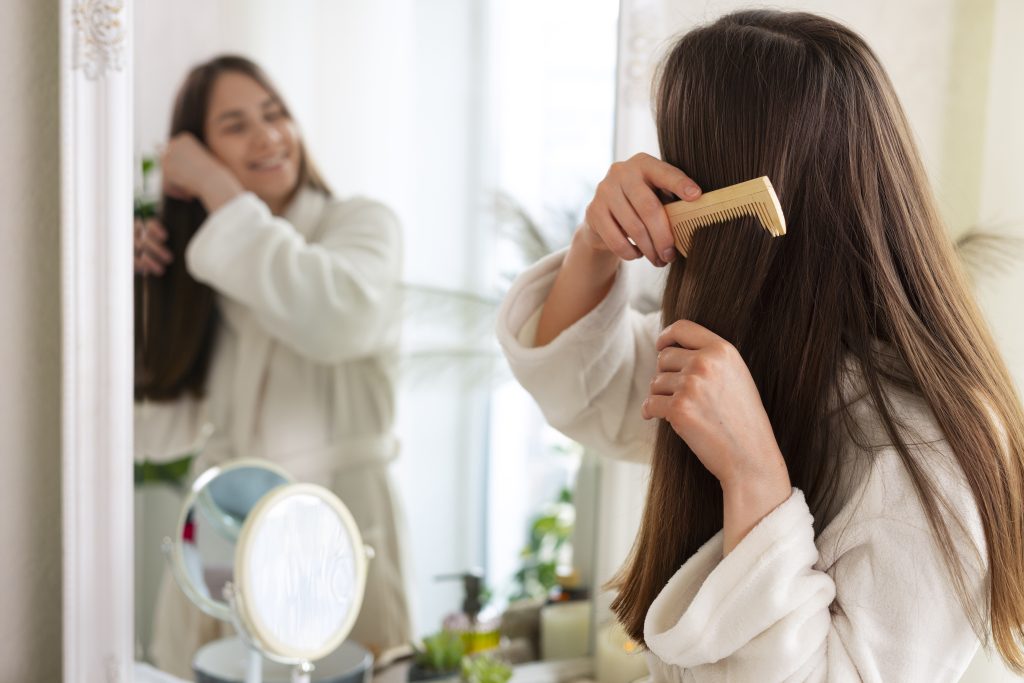
You can detangle slowly using a wide-tooth comb, starting from the ends and working upward. This prevents breakage and split ends that can make hair look fuzzy even when dry.
Also, before your hair dries completely, apply a leave-in conditioner, cream, or lightweight serum. Damp hair absorbs moisture better, helping seal hydration early. For those with curly or textured hair, you can brush it while it’s damp, and those with straight hair should let it dry a bit first.
3. Tame the Frizz Before Humidity Does
The third step will be on how to combat frizzy hair in humidity. Humidity is often the biggest trigger, especially in tropical climates like the Philippines during rainy season.
A small amount of serum or natural oil like our Smoothing & Nourishing Hair Serum can help smooth the surface and protect strands. Air drying or using low heat is also gentler than blasting hair with high temperatures. On extra humid days, simple styles like soft braids, buns, or clips can help keep hair contained and reduce exposure to the air.
4. Pamper with Regular Hair Treatment
If your hair constantly feels rough or thirsty, daily conditioner might not be enough. Adding a weekly deep conditioning mask such as Natural Hair Coco Mask is one of the most effective hair treatments for dry, frizzy hair. Rich ingredients like coconut oil help restore softness and improve manageability over time.
For those looking for how to get rid of frizzy hair naturally, plant-based oils are a simple option. Just a few drops on the ends can seal in moisture and add shine without weighing hair down. Consistent nourishment often leads to smoother results than layering on more styling products.

Healthy Hair Starts With Gentle Care
Managing frizz isn’t about chasing perfectly flat hair but giving your strands what they actually need: hydration, gentle handling, and protection from everyday stress.
When you focus on caring for your hair instead of fighting it, frizz becomes easier to control, and your hair naturally looks healthier, softer, and smoother. Just the right techniques, nourishment, and no harsh fixes required.
