


If your skin is sensitive, vitamin C can feel like one of those skincare ingredients you want to love but aren’t sure you can trust. You want the brightness and glow everyone talks about, but you may also worry about stinging, redness, or irritation. If you’ve tried one before, only to set it aside, you’re not alone.
But here’s the bright side: a vitamin C serum for sensitive skin can be safe and effective, with the right formula and a bit of patience. The key is having gentle, hydrating ingredients and introducing it to your routine little by little. More often than not, it’s the formula, the concentration, or how quickly it’s used, not vitamin C itself, that shapes the results you see.
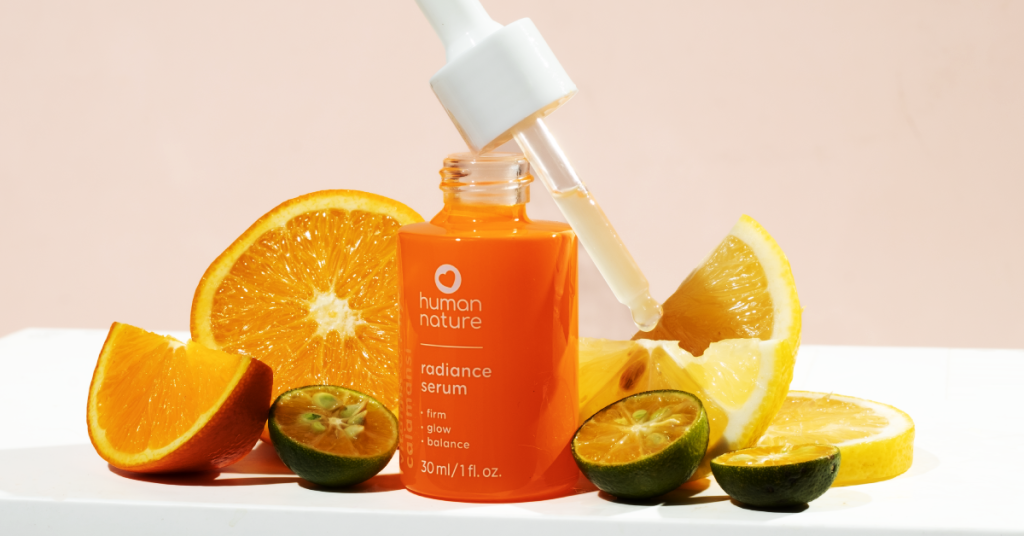
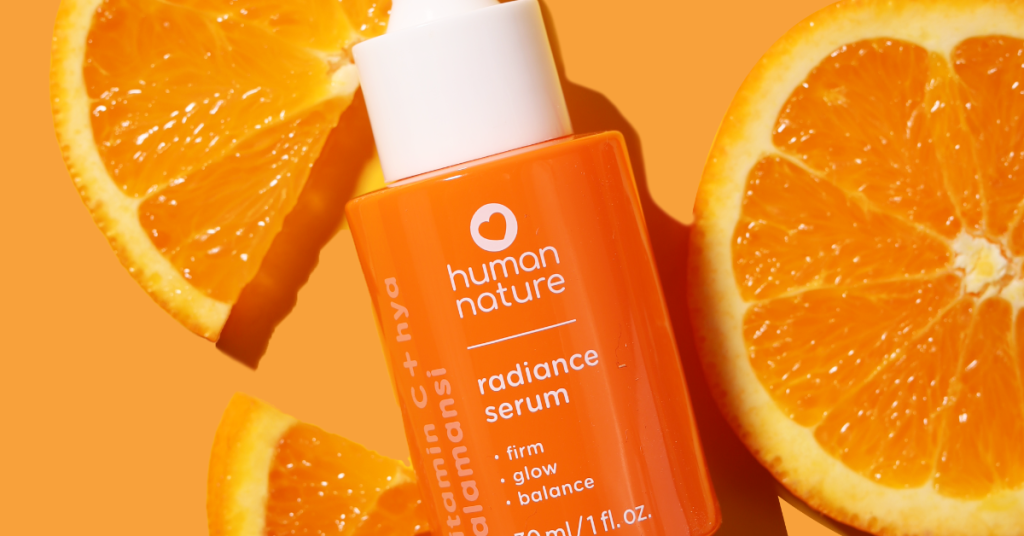
This guide will help you understand how vitamin C works, what to look for, and how to use it comfortably. We will also look at how Human Nature’s Vitamin C + Hya Calamansi Radiance Serum fits in, as a formula designed with sensitive skin in mind.
Why vitamin C is worth it, and why it sometimes stings
Vitamin C has earned its place as a well-loved skincare ingredient, and for good reason. It helps brighten dull skin, promotes a more even-looking complexion, softens the appearance of dark spots, and provides antioxidant protection against everyday environmental stressors like sun exposure and pollution.
So why does it sometimes sting, especially on sensitive or reactive skin? It often comes down to the formula, not the vitamin itself. Some serums rely on a high concentration of pure L-ascorbic acid at a low pH, and that acidity is often what sensitive skin reacts to. Layering too many strong actives at once, or using a serum that has oxidized, can also play a role.
Sensitive skin is also more common than you might think. A 2020 systematic review in the Journal of the European Academy of Dermatology and Venereology found that 71% of adults self-reported some degree of sensitive skin.1
But sensitive skin doesn’t mean you have to miss out on vitamin C. In many cases, it’s simply about finding a milder formula and introducing it slowly.
What should sensitive skin look for in a vitamin C serum?
When you’re choosing a vitamin C serum for sensitive skin, it helps to look beyond the promises on the bottle and pay attention to the ingredients.
A gentler, more stable form of vitamin C
Sensitive skin often responds better to stable vitamin C derivatives, such as ascorbyl glucoside, than with high-strength, low-pH formulas. These forms can still support a brighter complexion over time and suit sensitive-skin routines.
Moderate strength over the highest number
A higher percentage sounds like faster results, but for sensitive skin, stronger isn’t always better. Highly potent formulas are more likely to cause discomfort, and discomfort is usually what makes people quit. A moderate-strength serum that you can use comfortably and consistently can do more for your skin in the long run.
Hydrating, supportive ingredients
Sensitive skin appreciates ingredients that help maintain comfort and hydration, such as hyaluronic acid and glycerin. While a serum with fragrance or essential oils isn’t off-limits, it’s always a good idea to introduce new products slowly and patch test first, especially if your skin tends to be reactive.
How to use vitamin C serum without irritating your skin
Finding the right vitamin C serum is important, but how you introduce it matters too. A slow, steady start gives sensitive skin the time it needs to adjust.
- Patch test first. Dab a small amount on your inner arm or jawline for a few days before going all over your face.
- Start slow. Use it two to three times a week, then build up, watching how your skin responds.
- Be mindful of your layering. Hold back on strong exfoliants or retinoids at first, so your skin isn’t handling too much at once.
- Finish with sunscreen each morning. Vitamin C and SPF support each other against daily sun exposure and pollution.
Where vitamin C fits in your skincare routine
A simple vitamin C skincare routine can easily fit into your day. After cleansing and toning, apply your serum, then follow with moisturizer to keep your skin nourished.
Many people apply vitamin C in the morning since its antioxidant benefits pair well with sunscreen, but the best time is the one that fits your routine. Consistency is what matters most.
Clearing up a few vitamin C myths
If you’ve been hesitant to try vitamin C, you’ve probably come across a few myths along the way. But many of them don’t hold up:
- “Sensitive skin can’t use vitamin C.” Plenty of sensitive-skin routines include it. The type of vitamin C and the overall formula are what matter.
- “The stronger, the better.” A higher percentage can mean more irritation, not more glow.
- “If it stings, it’s working.” Stinging is a cue to ease off, not proof of progress.
- “Vitamin C means I can skip sunscreen.” Vitamin C works alongside SPF. It does not replace it.
Stinging is a cue to ease off, not proof of progress.
Vitamin C for glowing Filipino skin in a hot, humid climate
While many vitamin C guides are written with cooler, drier places in mind, Filipino skin faces a different set of everyday challenges: intense sun, high humidity, and city pollution. PAGASA describes the Philippine climate as tropical and humid, with average monthly humidity ranging from 71% in March to 85% in September.2
That’s why the right daily antioxidant matters. Vitamin C for glowing skin is less about choosing the strongest formula and more about finding one your skin can use comfortably and consistently. In humid weather, a lightweight serum with oil-balancing ingredients can help skin look fresh, not shiny.
When choosing a vitamin C serum in the Philippines, consider not just how well it brightens, but how it feels in heat and humidity. Human Nature’s Vitamin C + Hya Calamansi Radiance Serum brings together plant-based vitamin C, locally sourced calamansi, hyaluronic acid, and zinc PCA to support brighter-looking and more balanced skin. It’s also made with Human Nature’s commitment to natural care, using a 100% natural, vegan, and hypoallergenic formula with no harmful chemicals.
Frequently asked questions
Is vitamin C serum safe for sensitive skin?
For many people, yes. Sensitive skin can still enjoy the benefits of vitamin C when the formula is mild and introduced gradually.
Often, irritation comes from high-strength, low-pH formulas rather than vitamin C itself. Start with a patch test and a milder derivative to help your skin adjust.
What kind of vitamin C is good for sensitive skin?
For sensitive skin, a moderate-strength vitamin C formula that feels comfortable to use consistently is often a better fit than a high-strength, low-pH option. It can support a brighter-looking complexion while being easier to introduce gradually into your routine.
Should you use vitamin C serum in the morning or at night?
Either option works, so the best choice is the one that fits naturally into your routine.
Many people prefer mornings because vitamin C’s antioxidant benefits complement sunscreen. But if evenings suit your routine better, that works too. Just don’t skip daytime SPF.
How do you start vitamin C without irritating your skin?
A slow start is often the best approach. Begin with a patch test, then use your vitamin C serum two or three times a week before gradually increasing frequency.
Keep your routine simple by avoiding strong exfoliants or retinoids, and follow with a moisturizer to help support your skin barrier.
Can vitamin C help with dark spots and give you a glow?
Yes. Vitamin C is widely recognized for helping skin look brighter and more even-toned over time, and it can also help soften the appearance of dark spots with consistent use. Pairing it with daily sunscreen helps protect your skin from further sun-related discoloration.
The takeaway
Sensitive skin doesn’t have to sit vitamin C out. A stable vitamin C serum for sensitive skin, used at a moderate strength and introduced slowly, can help bring out brighter, more even-looking skin without the discomfort you may have worried about.
If you’ve been curious but cautious, a milder option may be a good place to start. Take a closer look at Human Nature’s Vitamin C+ Hya Calamansi Radiance Serum and how it could fit into your routine.
- Chen W, Dai R, Li L. (2020). The prevalence of self-declared sensitive skin: a systematic review and meta-analysis. Journal of the European Academy of Dermatology and Venereology. https://doi.org/10.1111/jdv.16166 ↩︎
- PAGASA. (2024). Climate of the Philippines. Philippine Atmospheric, Geophysical and Astronomical Services Administration. https://www.pagasa.dost.gov.ph/information/climate-philippines ↩︎